"A strict vigil is being maintained in almost all the sectors with China from Ladakh to Arunachal Pradesh as the Chinese suffered a setback in the southern Pangong Tso area and may try to make fresh attempts to ingress into newer dormant areas," government sources told ANI.

The eastern theatre command of the Chinese People's Liberation Army successfully completed all tasks of its combat readiness patrols and exercises around Taiwan Island, official media in Beijing reported.

'In the 1971 War my battalion suffered 4 casualties after fighting for 14 days.' 'In Operation Blue Star, I lost 19 men in just one hour.'

Military experts said the aim of constructing the bridge in the Khurnak area could be to ensure that the Chinese People's Liberation Army is able to quickly mobilise its troops in the region.

After a gap of over two-and-half months, India and China on Sunday held the ninth round of military talks specifically focusing on ways to move forward on the long-negotiated disengagement process in eastern Ladakh as thousands of their troops remained deployed at friction points under freezing conditions.

Sources indicated that during Saturday's talks, India will insist on a faster disengagement process in remaining areas to bring down tension in the region, which has witnessed a tense standoff between the two militaries for over nine months.

...with a principal reason to stop Pakistan's ISI's support to insurgencies in the North-East of India.

As the pyres were being lit, thousands of villagers who had gathered shouted slogans against Pakistan and demanded tough action against the soldiers' killing.
'This reluctance to respond forcefully to Chinese PLA provocations and outright aggression has as much to do with Prime Minister Modi personally, as with the institutional mindset of the MEA or even the Indian Army.' 'They are scarred by the 1962 War and are still cowed by China.'
According to sources, the post at which the Chinese army has put up loudspeakers is under 24x7 constant watch by Indian soldiers and it is possible that the Chinese might be indulging in such drama to distract our troops or perhaps just relieve the pressure.
There was no comment from the Indian side on the statement made by the Chinese defence ministry spokesperson Colonel Wu Qian, and carried by China's official media.

More than 180 people have lost their lives and nearly one crore people were affected in floods in West Bengal, Gujarat, Rajasthan and Odisha.
The sources also said another round of military talks between the two sides on Wednesday to defuse tensions in the area remained inconclusive. The talks lasted nearly seven hours.

General Zhao Zongqi is well known in India for having commanded the Chinese troops during the Dokalam episode. Zhao knows every inch and corner of the Indian border, at least the Eastern and Central sectors, including the Naku La area which witnessed fist-fights between Indian and Chinese troops in April/May. Claude Arpi introduces us to the PLA generals masterminding the Chinese aggression in Ladakh.

Prime Minister Narendra Modi condoled his demise, saying Kumar contributed towards strengthening the country's maritime security.

The Army has also further bolstered overall surveillance mechanisms in all areas along the Line of Actual Control (LAC) in eastern Ladakh after foiling China's fresh attempt to occupy an area on the southern bank of Pangong lake, they said.
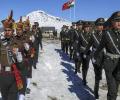
Sources said India will not lower its guard and will maintain the current state of very high-level of combat readiness in eastern Ladakh till there are visible changes in the ground situation.

Tan said that China has always stressed that military cooperation of relevant countries, especially on exercises and training activities, should not be targeted at any third party, but rather serve to help maintain regional peace and stability.
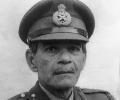
Lieutenant General Walter Anthony Gustavo Pinto was known for his dynamic, bold and aggressive leadership in the Battle of Basantar during the 1971 War. Lieutenant General B T Pandit -- who was awarded a Vir Chakra for his courage during that battle -- salutes the Victor of Basantar who passed into the ages last week.

On World Disability Day, in the presence of 150 differently abled soldiers, Lieutenant General P M Hariz, the Southern Army Commander, honoured the late Rediff.com columnist Flying Officer M P Anil Kumar.

The Chinese have just one commander for all the forces confronting India. Commanders of all these forces answer to one man, and one headquarter. India, on the other hand, offers a diversity of options that is a military embarrassment in the 21st century. In Arunachal and Sikkim-Bhutan, the Eastern Army Commander is in charge. In the Uttarakhand (central) sector, it will be the Central Army Commander. The Himachal-Tibet border is the domain of the Western Army Commander. And all of Kashmir and Ladakh further on, the Northern Army's. Effectively, an array of at least eight 'three-star' commanders will be arrayed against one Chinese, says Shekhar Gupta.
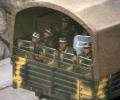
The intrusions into India were likely carried out by the PLA's better trained and equipped 'mobile operational units'.
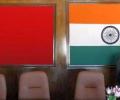
In a written reply to a question in Lok Sabha, Minister of State for External Affairs V Muraleedharan gave a brief account of the four-month-long standoff and said the Chinese side attempted to transgress the Line of Actual in several areas of the western sector since mid-May.

Army columns equipped with boats, bulldozers and engineering equippment have been rushed to Nanded and Bhadrachalam districts.
Both countries have reached a mutual agreement for disengagement of troops from the most contentious area of North and South Pangong Lake.

A high-tech Chinese research ship docked at the strategically important Hambantota port departed from Sri Lankan waters on Monday after a controversial six-day visit.
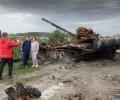
'Those who say that conventional war is a thing of the past or that war is not an option, or that diplomacy alone can prevent war -- are wrong and we see that in Ukraine.'
The sources said the focus of the talks was to take forward the disengagement process in friction points like Hot Springs, Gogra and Depsang in eastern Ladakh.
External Affairs Ministry Spokesperson Anurag Srivastava said India is committed to resolve all issues through dialogue, noting the way ahead to address the issue is negotiations.
India on Thursday once again called for completion of the disengagement process at the remaining friction points in eastern Ladakh to pave the way for both the Indian and Chinese troops to consider de-escalation and ensure full restoration of peace and tranquillity in border areas.

China's official media reported air and ground movement of troops in Taiwan Straits -- the waters that separate China and Taiwan -- as US House Speaker Nancy Pelosi landed in Taipei on Tuesday disregarding Beijing's stern warnings.
Asked about the reports of the troops on both sides disengaging and moving back to their previous positions, Chinese foreign ministry spokesperson Hua Chunying told a media briefing in Beijing that both sides are taking steps to ease the situation along the borders.
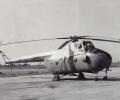
The retreating Pakistani troops were heading towards Dacca and they had to be stopped at all costs. The Eastern Army Commander, in his orders to General Sagat Singh, had reiterated that he did not want the troops of 4 Corps to cross the Meghna river. But General Sagat had other plans to threaten Dacca and ensure that the pressure would make the Pakistani commanders capitulate. This is where the IAF helicopters came in.
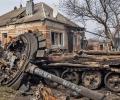
'The wise men learn lessons in war.' 'The smart men learn lessons from others, it's only the foolish who learn the wrong lesson.'

At a time when Donald Trump is making belligerent noises, Chinese President Xi Jinping responds by overhauling the People's Liberation Army and restructuring the command of the PLA Navy to emphasise Beijing's resolve to dominate the South China Sea.

In the review meeting, Singh told the top military brass to continue to deal with the situation in eastern Ladakh and other areas with "firmness".

'Both sides have agreed that the overall situation should be handled in a responsible manner'
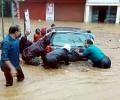
Heavy rains pounded south and central Kerala on Saturday wreaking havoc in many parts with some people feared missing in the landslides that occurred in hilly areas bordering Kottayam and Idukki districts prompting the state government to seek the assistance of the Army and Air Force for rescue operations.

Official sources said withdrawal of tanks and other armoured elements from certain friction points is nearing completion while pulling back of troops from the North bank areas is being undertaken.

'The military officers at China's National People's Congress reflect Xi Jinping's preference for elevating politically reliable, younger, officers with good professional qualifications,' says former RAW officer and China expert Jayadeva Ranade.
 © 2026 Rediff.com - Advertise with us - Disclaimer - Privacy Policy - Sitemap - Feedback - About us - Terms of use - Grievances